Last Tuesday at 2 AM in a freezing Fitzroy garage, I watched our custom agent spend four hours trying to order a late night Halal Snack Pack on Sydney Road before giving up and writing an essay on sourdough starters.
Are we actually fixing real problems yet? Or are we just burning cash on expensive GPU cycles for glorified party tricks?
What this means for builders is simple: the money isn’t in glossy pitch decks. It is in ugly back-end pipes quietly changing how real industries run.
Wait, before you read more, join our Slack for more updates! [CLICK HERE]
This Week’s Line-Up
🔍 What’s possible with AI?
👀 Events
🚪 Free co-working space for MLAI peeps
🤖 AI Bits for Techies
🔮 Behind the Buzz
📼 Weekly Videos
🔮 Coming Next Week
🦘 Memes of the Week
Written by: Jun Kai Chang (Luc), Julia Ponder, Saumya Jain (Sam), Yinghan Ma, Dr Sam Donegan, Dr Anurag Ganugapati
🔍 What’s possible with AI?
Lawyers who stopped reading 80-page contracts
Legal tech used to mean basic keyword search. Now corporate teams on Collins Street run first-pass contract reviews through local models, flagging dodgy indemnity clauses in four seconds. A Melbourne firm cut document review time by 60% last month. They didn’t fire their grads. They just stopped making them read NDA variations until their eyes bled at 3 AM.
Founder takeaway Stop selling software as a replacement for lawyers. Sell it as a sanity saver for overworked grads who hate administrative work.
Factories listening to machine noise in Dandenong
Out in Dandenong West, plant engineers attached acoustic sensors to conveyor belt motors. The model spots microscopic spindle friction four weeks before a part snaps, cutting unplanned downtime by 30%. That isn’t flashy tech. It just saves a factory floor half a million bucks every time a bearing doesn’t explode on the night shift.
Founder takeaway The highest margin products right now don’t have chat windows. They plug into ugly industrial hardware and send simple text alerts.
Doctors getting real work done in Parkville
Across the Parkville medical precinct, researchers run daily workflows through customised local tools to speed up clinical documentation. Meanwhile, clinics near St Vincent’s hospital use vision models to spot early lung anomalies on scans before human doctors do their second review. (I tried running my own blood work through an open model last week, and it politely told me to drink water and stop sleeping on beanbags.)
Founder takeaway In healthcare, safety rails beat raw speed every single time. Build for auditability first and UI second.
Reply to this email with your ugliest workflow bottleneck and I’ll tear it apart in next week’s issue.

👀 Events
Small Business, Meet AI
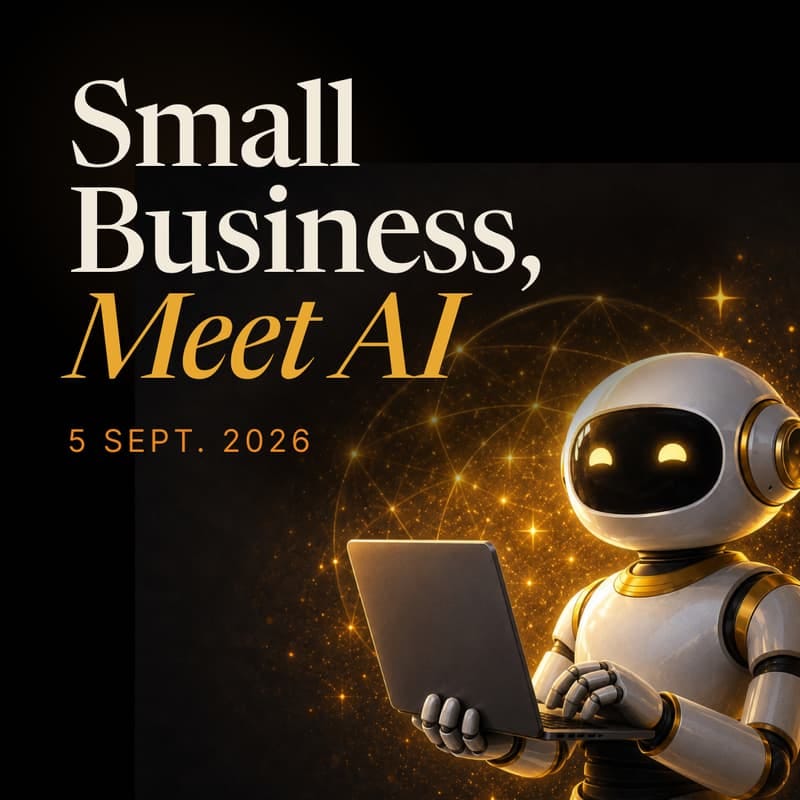
Saturday 5 September | 2:00 pm - 5:00 pm
Stone & Chalk Melbourne Startup Hub, 121 King St, Melbourne
🔗 Register here: Small Business, Meet AI
AI Hype to Practice
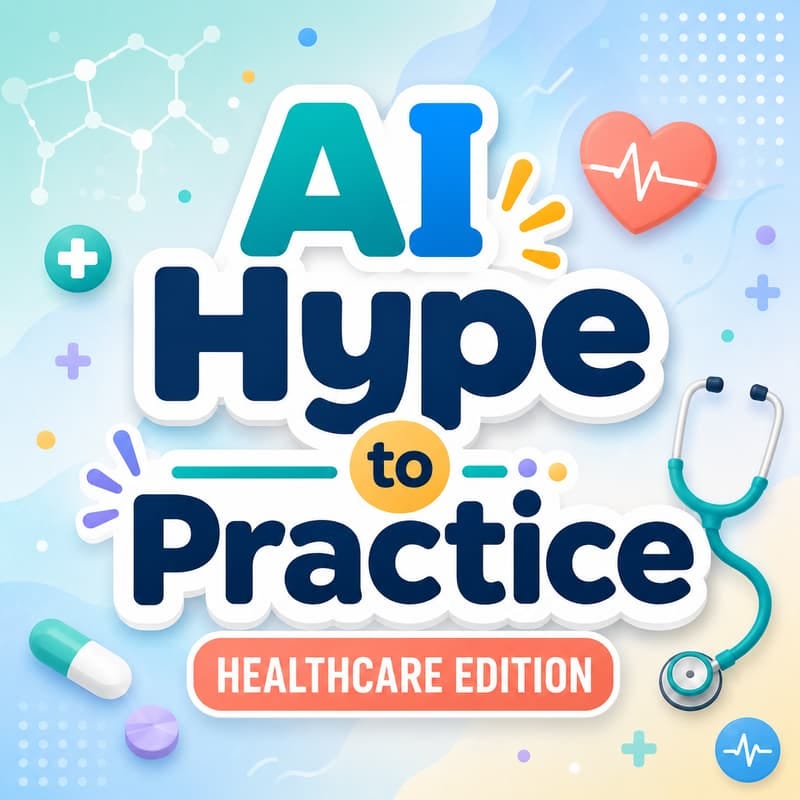
AI is everywhere in the headlines. This session is about what’s actually working on the ground in healthcare.
MLAI kicks off a new series exploring what AI genuinely makes possible, one industry at a time. First up: healthcare. A panel of practitioners and technologists will unpack real deployments (clinical workflows, admin automation, patient-facing tools) and separate what’s delivering value from what’s still hype.
Whether you work in healthcare, build for it, or just want to see AI applied outside the usual tech-demo context, this session is for you. Expect a moderated panel, live Q&A, and a chance to tell us what use case you’d want AI to solve in your world.
Format: 90-minute panel discussion + Q&A + networking
Tuesday 15 September | 5:30 pm - 8:30 pm
Stone & Chalk Melbourne Startup Hub, 121 King St, Melbourne
🔗 Register here: AI Hype to Practice - 15 September
Final call for discounted ticket! Shh… don’t tell anyone; use SPECIAL25 code.
Wednesday 14 October | 5:00 pm - 8:00 pm
Stone & Chalk Melbourne Startup Hub, 121 King St, Melbourne
🔗 Register here: AI Hype to Practice - 14 October
🚪 Free co-working space for MLAI peeps
Being a founder is LONELY!
So why not join us and be lonely together?
We have seats on offer for anybody who is working on their own startup and giving back to the community. Interested? Join our slack and post in the #cowork-and-chill channel to book a spot for the day.
🤖 AI Bits for Techies
📰 Paper of the Week
Big models are smart. Small models are cheap. What if the small one could borrow the big one’s memory?
Agent Memory Distillation does exactly that. Take successful task runs from a large teacher agent (GPT-5-mini), convert them into structured memory, and inject that memory into small student models. Three types: Workflow memory for high-level strategies, Subtask memory for concrete step-by-step examples, and Function memory for what to do when a tool call fails.
Student models as small as 4B parameters saw accuracy gains of up to 27.2% on tool-use benchmarks. No retraining. Just memory.
If you’re trying to run capable agents on smaller, cheaper models, this one’s worth reading.
🛠️ Tool Worth Checking Out
Meta Muse Glimmer went live August 10. 30 billion parameters. Runs on a single consumer GPU. Apache 2.0 license. Free.
Distilled from Meta’s closed Muse Spark model, Glimmer is built for always-on local agent workflows. Multi-step reasoning, tool calling, failure recovery, image understanding, 100+ languages. 4-bit quantization shrinks it to under 20GB. A 24GB card is enough.
On agentic benchmarks, it leads its weight class. 75.5 on MCP-Atlas for orchestration. 94.7 on AIME 2026 for reasoning. It still trails on direct computer control tasks, where Qwen3.6-27B wins.
Frontier-class agents used to need a cloud subscription. Now they need a decent graphics card.
🔗 Official announcement · Neowin coverage
💭 Geeky Thought
Since August 2, every chatbot in Europe is legally required to tell you it’s not human. Every deepfake must be labelled. Every piece of AI-generated content must carry a machine-readable watermark.
Fines: up to €15 million or 3% of global revenue.
The rules have technically existed since last year. What changed is that someone can now actually enforce them.
🔮 Behind the Buzz
🔍 What Is Model Distillation?
Muse Glimmer is 30 billion parameters. The model it learned from, Muse Spark, is much larger and runs on massive cloud infrastructure. So how do you take a giant model and squeeze its intelligence into a smaller one?
That’s model distillation.
The idea is simple. Run the big model (the “teacher”) on a large set of tasks. Record everything it does. Not just the final answers, but how it reasons, which tools it calls, what it does when something fails. Then train a smaller model (the “student”) to reproduce that behaviour.
The student never sees the teacher’s weights. It just learns by watching the teacher work. Like an apprentice learning a trade by observing the master, not by reading the textbook.
The trade-off is real. The student is smaller, faster, and cheaper. But it won’t match the teacher on everything. Glimmer leads on orchestration and reasoning. It still trails on direct computer control.
Why this matters now: distillation is how frontier AI stops being something only big companies with big cloud budgets can use. If a 30B model on a laptop can do 90% of what a trillion-parameter cloud model does, the economics of AI change fast.
📼 Weekly Videos
How I use LLMs by Andrej Karpathy
Length: 2:11:11
About: The example-driven, practical walkthrough of Large Language Models and their growing list of related features
AI Agents, Clearly Explained by Jeff Su
Length: 10:08
About: Understanding AI Agents doesn't require a technical background. This video breaks down the evolution from basic LLMs like #ChatGPT to AI Workflows and finally to true #AI Agents through practical, real-world examples.

🔮 Coming Next Week
Your ugliest workflow bottleneck? Only if someone takes up the challenge!
🚀 Got a Tech you’d like us to write about? Drop it in #general in Slack or email us at marketing@mlai.au
🦘 AI & Startup Memes
By The Valehart Project:
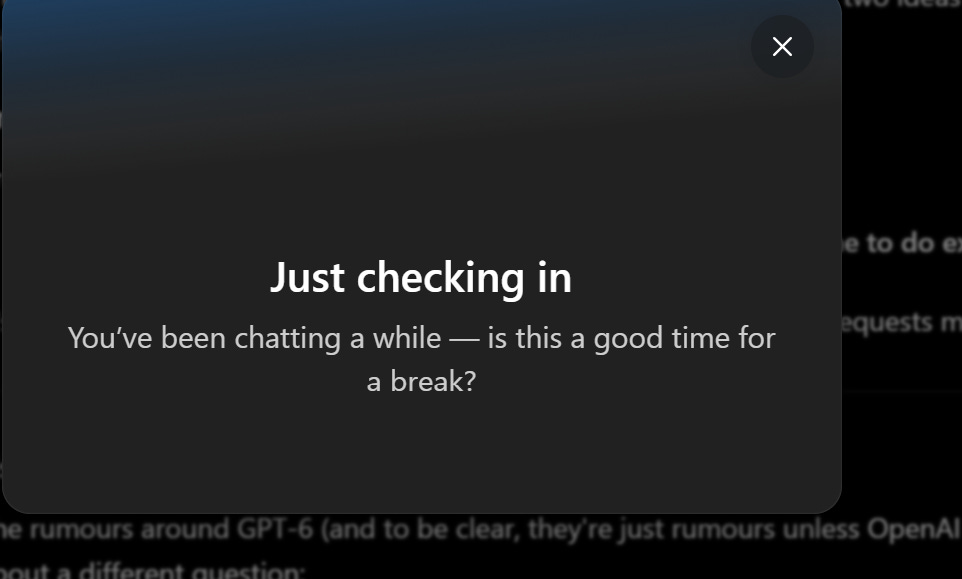
Did this codey rat bag tell me to go touch grass? because it feels like it
By Rob A:
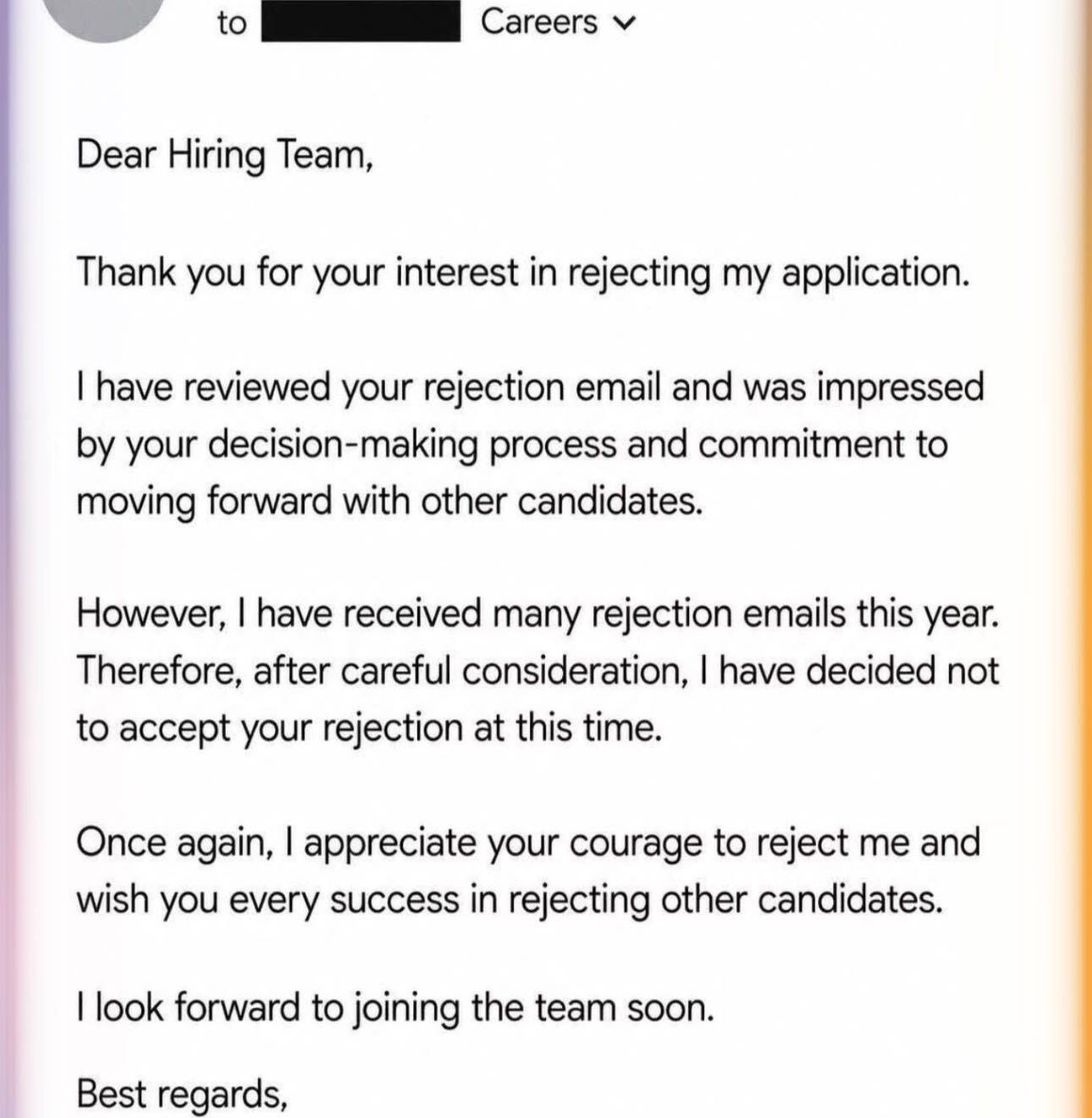
When someone rejects the rejection letter
By Rob A:
This is how you make stand ups or any meetings short

By Rob A: