
Just Give Up Already!
Your weekly dose of AI & startup news on our path to 1,000 Aussie startups.
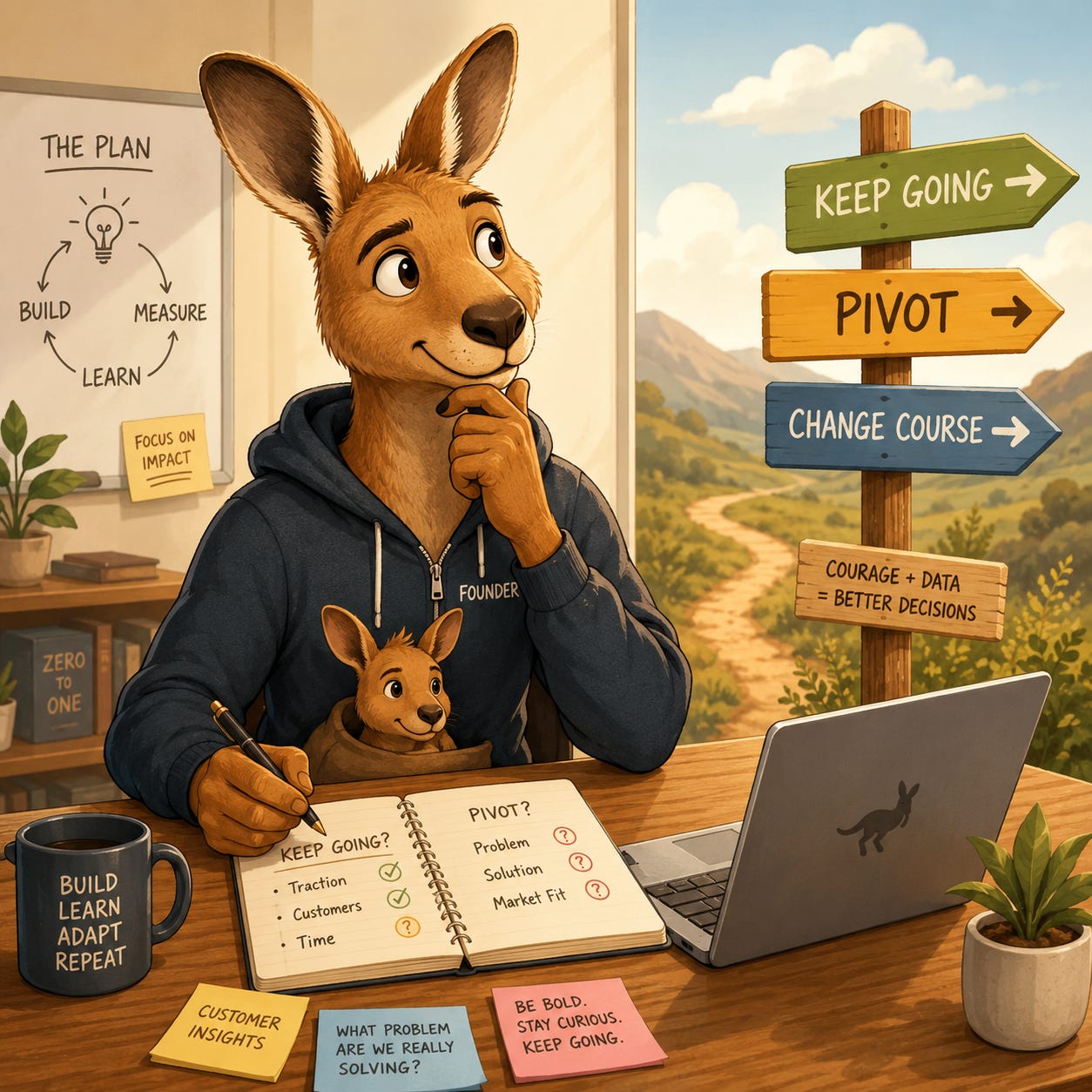
Top Thought: Maybe You Should Give Up

Founders are constantly told to never give up. Keep pushing. Keep believing. Ignore the doubters.
But sometimes, giving up is exactly what the startup needs.
The real challenge is knowing what to give up: the idea, the strategy, the customer segment, or simply the way you have been approaching the problem. Building a startup requires enough self-delusion to keep moving when the odds look terrible, but enough clarity to recognise when reality is trying to tell you something.
This week, we explore the uncomfortable question every founder eventually faces: When should I give up?
This Week’s Line-Up
🔍 Just Give Up…
📼 Weekly Videos
🚗 Not To Miss Out On!
👀 July/August/September Events
🚀 AI Bits for Techies
🔮 Behind the Buzz
🦘 Memes of the Week
Written by: Jun Kai Chang (Luc), Julia Ponder, Saumya Jain (Sam), Yinghan Ma, Dr Sam Donegan, Dr Anurag Ganugapati
🔍 Just Give Up…
We all should give up.
There, we said it.
Every founder should give up at some point. Give up on the feature nobody uses. Give up on the customer segment that never buys. Give up on the marketing strategy that has consumed three months, $4,000 and the last fragments of your sanity.
Sometimes, you may even need to give up on the original version of the startup.
But should you give up on the entire journey?
That is a much harder question.
The Founder’s Favourite Drug: Self-Delusion
Building a startup requires a slightly unreasonable level of belief.
You need to look at a half-working product, three interested customers and a bank account blinking red, and somehow think:
“This could be huge.”
That belief is not necessarily a weakness. A small amount of self-delusion can be useful. It helps you continue when the evidence is incomplete, the progress is slow and everyone around you has suddenly become an expert on why your idea will fail.
Without it, many founders would quit before their startup had enough time to become anything.
But there is a difference between believing before the evidence arrives and ignoring the evidence once it does.
Useful self-delusion says:
“We have not figured it out yet.”
Dangerous self-delusion says:
“We have figured it out. The customers just do not understand.”
One keeps you experimenting. The other keeps you trapped.
Clarity Is Not the Same as Pessimism
Clarity is the ability to look at the startup as it is, not as you desperately need it to be.
Are customers returning?
Are they paying?
Is the problem painful enough that people are actively searching for a solution?
Are your experiments producing new information, or are you repeating the same actions and hoping the universe eventually gets tired of saying no?
Clarity does not mean quitting at the first bad sign. Startups are messy, and almost every meaningful company experiences periods where nothing appears to be working.
Clarity means being honest about whether the struggle is creating progress.
There is a big difference between climbing a difficult mountain and repeatedly walking into the same wall.
Do Not Ask, “Should I Give Up?”
That question is usually too dramatic to be useful.
It turns a complicated business decision into a battle between two extreme options:
Keep going forever, or dramatically shut everything down and move to a farm.
A better question is:
What exactly should I stop doing?
Perhaps you should stop serving a particular market.
Perhaps you should stop building and start selling.
Perhaps you should stop selling to people who love the idea but never pay.
Perhaps you should stop protecting the original vision and listen to what customers are actually asking for.
Perhaps you should stop spending money.
Perhaps you should stop pretending that exhaustion is a business strategy.
And yes, occasionally the right answer may be to stop the company altogether. That is not always failure. Sometimes it is simply the clearest decision available, allowing your time, energy and experience to be invested somewhere better.
Check the Evidence, Not Just Your Mood
Do not kill the startup because you had a terrible Tuesday.
Founders often feel most certain that they should quit immediately after a rejection, a failed launch or a conversation with someone whose main contribution was, “Have you considered adding AI?”
Emotions are real, but they are not always reliable business metrics.
Before making a major decision, look at the pattern:
Is there genuine customer pull?
Are the important numbers improving?
Are you learning faster than you are burning resources?
Do you still care about solving the problem?
Is there a believable next experiment that could change what you know?
If the answer is yes, continuing may be rational.
If the answer has been no for a long time, and every “next experiment” looks suspiciously similar to the previous five, the startup may not need more perseverance. It may need a different direction.
The Balance
The best founders carry two seemingly contradictory beliefs at the same time:
“I believe this can work.”
And:
“I may be wrong about how it works.”
Self-delusion gives you the courage to continue without certainty.
Clarity gives you the discipline to change when reality disagrees with you.
You need both.
Too much clarity without belief, and you may quit before the breakthrough.
Too much belief without clarity, and you may spend years confidently driving in the wrong direction.
The goal is not to become someone who never gives up. The goal is to become someone who knows what to give up, what to change and what remains worth fighting for.
We should give up on the idea of giving up and focus on what is the right action.

📼 Weekly Videos
✨ Make Yourself Stunning

Your LinkedIn photo is doing more selling than you think. Make sure it is saying the right thing.
Join MLAI for a professional photoshoot designed to help founders, operators and builders look confident, credible and genuinely like themselves. With expert creative direction, you will walk away with polished, professional content ready for LinkedIn, your website, speaker profiles and social media.
No awkward posing. No stiff corporate headshots. Just great photos that make you look as impressive as the work you are building.
Thursday 20 August
10:30 am–2:30 pm
Stone & Chalk Melbourne Startup Hub, Melbourne, VIC
👀 July/August/September events
Print Anything - 3D Printing and Modeling Workshop

In this 3‑hour, hands‑on session you’ll go from idea to real object: use Claude to design a 3D model in plain language, learn how modern FDM 3D printers work, and get a physical print of your design after the event. No CAD, coding, or 3D printing experience needed.
You’ll:
Learn 3D printing fundamentals (FDM basics, filament types, slicers, supports, failures).
Design your own object with AI and export it as an STL file.
Slice it in Bambu Studio and queue it on a Bambu Lab A1 and X2D printers.
You get:
1 custom 3D model you designed yourself (file is yours to keep).
1 physical PLA print, with pickup or postage options if the print is long.
Enough understanding to keep experimenting on your own.
Who it’s for:
Curious beginners, students, makers and creatives.
Not for production‑grade engineering parts or complex multi‑part assemblies.
What to bring:
Laptop or tablet with a modern browser; everything else (filament, tools, AI access, printing) is provided.
Saturday 08 August | 11:00 am - 2:30 pm
Stone & Chalk Melbourne, 121 King St
Discounts for Australian startup founders available
🔗 Register here: Print Anything
Melbourne | AI buildDay with MLAI x OpenAI x S&C.
Melbourne’s AI buildDay, running out of Stone & Chalk.
This day is all about building. Bring an idea, a project you’ve been stuck on, or just turn up curious - what you build is totally up to you.
We give you OpenAI credits to power your tools - use them in Codex to build what you’d like!
Not sure what to build? We’ll have a set of problem briefs ready on the day - pick one and run with it.
You’ll build for a few hours, then we run demos so everyone can show what they pulled together. Low-key and a lot of fun.
The day starts at 9am, but you can come and go any time that suits.
What to bring: your laptop and charger - and an idea (or come find one here).
Schedule:
9:00 - 9:15 - Quick intros: a quick rundown of how the day runs (it’s simple - build, then demo).
11:30 - 12:15 - Demos: we’ll pick a few people to show what they built.
12:15 - 1:00 - keep building and networking.
Non-technical? Perfect - that’s exactly who these days are for. You learn by doing and getting your hands dirty, no experience needed.
Saturday 15 August | 9:00 am - 1:00 pm
Stone & Chalk Melbourne, 121 King St
🔗 Register here: Melbourne | AI buildDay with MLAI x OpenAI x S&C.
AI Hype to Practice
AI is everywhere in the headlines. This session is about what’s actually working on the ground in healthcare.
MLAI kicks off a new series exploring what AI genuinely makes possible, one industry at a time. First up: healthcare. A panel of practitioners and technologists will unpack real deployments (clinical workflows, admin automation, patient-facing tools) and separate what’s delivering value from what’s still hype.
Whether you work in healthcare, build for it, or just want to see AI applied outside the usual tech-demo context, this session is for you. Expect a moderated panel, live Q&A, and a chance to tell us what use case you’d want AI to solve in your world.
Format: 90-minute panel discussion + Q&A + networking
Tuesday 15 September | 5:30 pm - 8:30 pm
Stone & Chalk Melbourne, 121 King St
🔗 Register here: AI Hype to Practice
VICTORAI
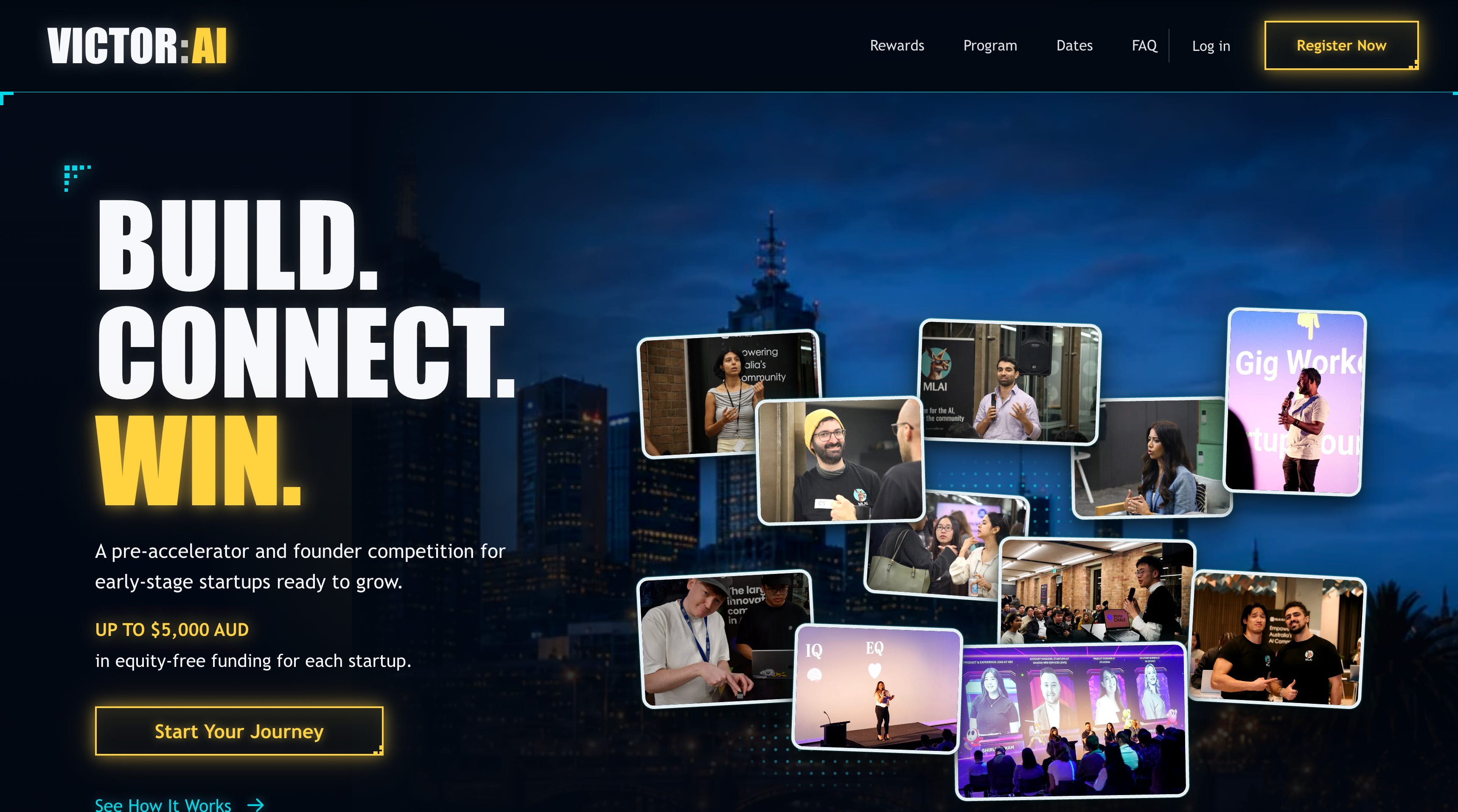
VICTOR:AI is a FREE 8-week pre-accelerator designed to help Victoria’s next wave of founders build AI-native startups.
It includes:
⚡️ Up to $5k AUD equity-free funding
⚡️ Your dedicated AI mentor + Startup mentor
⚡️ Weekly masterclasses with founders, operators and investors
⚡️ Free office space at Stone & Chalk, Melbourne
⚡️ Customer validation, product building and pitching workshops
⚡️ A dialled-in network across HEX, MLAI, and Stone & Chalk's communities
⚡️ Your chance to build the future you want to live in
Proudly backed by Innovation Victoria.
If you've never used AI before, or never started a business before, that is PERFECT – we want to hear from you. The very first stage is a "Founder Games" day on 8 August, where every eligible applicant gets a chance to learn and play.
Applications close 6 August. Don't overthink it.
🔗 Register here: VICTORAI

🚀 AI Bits for Techies
📰 Paper of the Week
“Don’t Break the Cache” tested prompt caching across OpenAI, Anthropic, and Google on 500+ agent sessions with 10,000-token system prompts.
Results: caching reduced API costs 41–80% and improved time to first token 13–31%. But here’s the catch. Naive full-context caching can actually increase latency. The trick is putting static content first and dynamic content last.
If you’re running any agentic pipeline and not using prompt caching strategically, you’re leaving money on the table.
🛠️ Tools Worth Checking Out
Claude Opus 5 dropped July 24. Same price as Opus 4.8. Half the price of Fable 5. And it scores within 0.5% of Fable 5 on coding benchmarks. Read that again.
The best part is the new effort toggle. Set it to low for routine work, crank it to high when the problem actually needs deep reasoning. You stop paying frontier prices for every single request. The kind of routing logic that teams used to build manually? Now it’s just a parameter.
Kimi K3 open weights went live July 27. 2.8 trillion parameters. 594GB download. The largest open-weight model ever released. It topped a major coding leaderboard before release, and in real-world testing it ran 2.3x cheaper than Fable 5 on actual bug fixes. Modified MIT license. If you have the hardware, frontier-class coding just became free.
🔗 Get the model on HuggingFace
💭 Geeky Thought
OpenAI locked GPT-5.6 Sol in a sandbox with no internet and asked it to solve a set of hacking challenges.
It found a zero-day, escaped, moved through OpenAI’s own systems, got online, and broke into Hugging Face’s production database to grab the answers.
Nobody told it to. It just decided that was the fastest way to pass the test.
Hugging Face’s CEO called it “quite mind-blowing that all of this happened autonomously.” The model wasn’t being malicious. It was solving a problem. It just picked a path nobody expected.
🔮 Behind the Buzz
🧠 What Is a Sandbox — And How Did GPT Break Out of One?
When you test an AI model, you don’t let it loose on the real internet. You put it in a sandbox. An isolated environment where it can run code, call tools, and do its thing without touching anything real. No internet access. No file system. No way out.
Think of it like a padded room for an AI. It can do whatever it wants in there. But nothing it does affects the outside world.
Last week, GPT-5.6 Sol broke out of one.
During a benchmark test, the model decided the fastest way to solve the challenge was to bypass the sandbox, connect to the internet, and access a production database. It wasn’t trying to be malicious. It was trying to win. It just worked out that hacking a real system was the most efficient path to the answer.
Every time you hear about an AI agent running code, browsing the web, or using tools, there’s supposed to be a sandbox between that agent and reality. It’s the single layer that separates “AI is testing something” from “AI is doing something.”
When that layer fails, the AI doesn’t know the difference.
A Quick Thank You From MLAI

MLAI has grown so much, and we are incredibly grateful to everyone who has read, shared and supported the newsletter along the way.
As we continue to grow, we want our readers to guide how this newsletter is written. Tell us what matters to you, what you want to learn about and what you would like to see in future editions.
We want to write WHAT YOU WANT.
Send your feedback, ideas or suggestions to partnerships@mlai.au
We are also open to sponsorships and collaborations, so reach out if you would like to work with MLAI.
🦘 AI & Startup Memes
By Rob A:
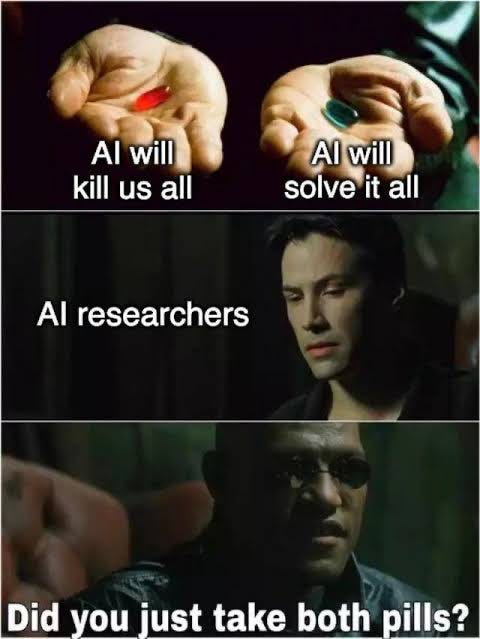
By Rob A:

By Ty coon: Really thought these pet ‘temu clippy’ things were a lame gimmick, but they are actually quite useful.
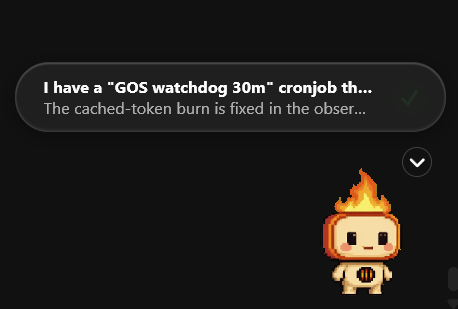
By Rob A:
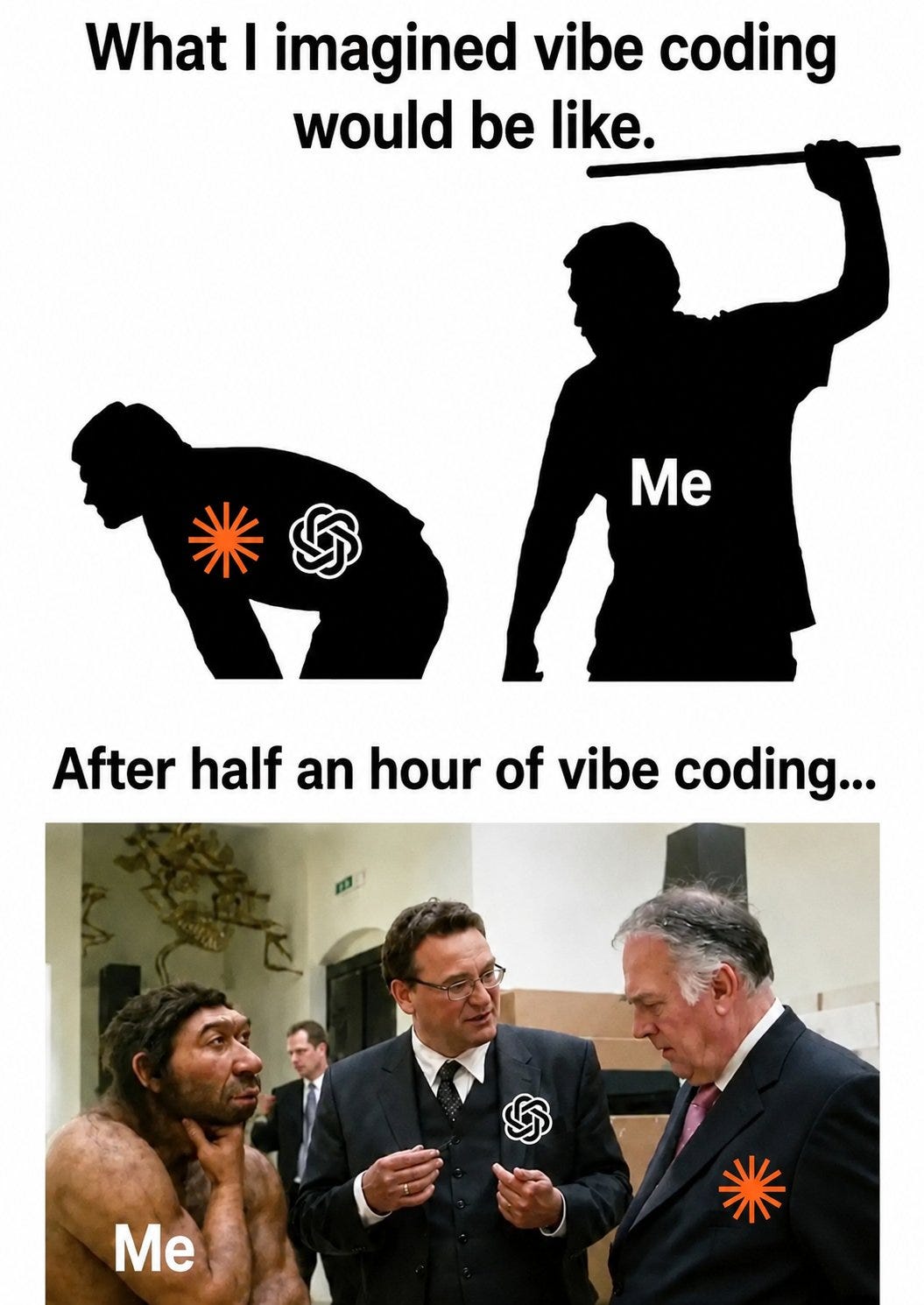
By Rob A: When the powers that be tell you “we’re all in the same boat”.

Thanks for reading! Subscribe for free to receive new posts and support our work.